
Eliminating schistosomiasis requires more than treating infection. It requires interrupting transmission at its source. In Ethiopia, where millions rely on rivers, ponds, and irrigation canals for daily life, repeated exposure to infested water sustains the cycle of infection despite years of Mass Drug Administration (MDA). While MDA has reduced the burden of disease and protected vulnerable populations, it does not prevent reinfection.
To move from disease control to elimination, NALA, in partnership with the Ethiopian Ministry of Health, academic institutions, district health systems, and local communities, is advancing a community-led prevention model targeting freshwater snails, the intermediate hosts of schistosomiasis.
Mapping transmission at the source
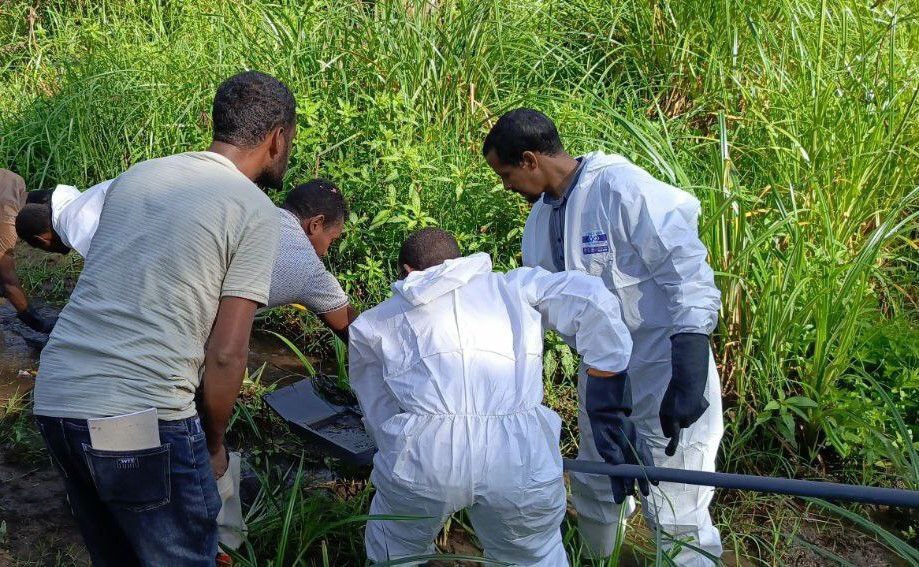
Schistosomiasis transmission is highly localized. It concentrates in ecological hotspots where human-water contact overlaps with habitats suitable for freshwater snails carrying the parasite. Identifying these hotspots is essential for directing interventions to the places where transmission risk is highest. Across eight districts in Ethiopia, , NALA is implementing participatory snail mapping and control; surveying 192 freshwater sites including rivers, ponds, lakes, and irrigation canals. This approach combines ecological observation, epidemiological evidence, and community knowledge to identify where transmission persists and why.
Community members function as active surveillance agents, helping identify high-contact water points, environmental changes, and priority sites based on lived experience. Using standardized timed sampling methods, teams collect snail specimens and document ecological and behavioral risk factors. This evidence helps NALA to generate spatial risk maps that classify water bodies into operational tiers and guide targeted intervention.
Empowering local surveillance through science
Community-led surveillance is the foundation of sustainability. NALA invests in training local volunteers as snail collectors and field research assistants, equipping them with practical skills in habitat recognition, specimen collection, and environmental risk documentation.
This decentralized surveillance model expands the reach of scientific monitoring while strengthening local ownership of schistosomiasis prevention. Communities do not simply support implementation; they generate actionable field intelligence that shapes intervention decisions.
In addition to community surveillance, systematically collected snail samples are transferred to a local university for laboratory analysis. This scientific validation confirms species identification, assesses infection status where relevant, and strengthens the biological evidence base for intervention planning.
By linking community-generated field data with laboratory science, NALA establishes a strong operational bridge between local surveillance and institutional research. This integration ensures interventions are evidence-based, targeted, and biologically informed.
Converting evidence into targeted action
Mapping is only valuable when it drives action. It is important to translate field and laboratory evidence into tiered intervention strategies based on transmission risk.
High-risk sites receive intensive environmental control measures designed to reduce snail habitats and human exposure. Community members spearhead habitat modification by clearing aquatic vegetation, draining stagnant microhabitats, and improving water access points to reduce direct contact with infested water.
Safe infrastructure is also integrated into prevention planning. These include washing platforms, designated water access points, and sanitation improvements which help reduce exposure and limit environmental contamination.
Behavioral interventions reinforce these structural changes. Targeted social and behavioral change communication supports safer water practices among agricultural workers, women, and other populations with frequent water exposure.
This integrated package shifts schistosomiasis prevention from reactive treatment to proactive vector and environmental management.
Scaling impact through local innovation and partnership
A defining feature of this model is the revival of Endod (Phytolacca dodecandra) (on a trial basis), an indigenous Ethiopian plant with proven molluscicidal properties first advanced through the pioneering work of Professor Aklilu Lemma, an Ethiopian scientist.
The NALA team is collecting Endod berries across intervention districts under the technical guidance of the Aklilu Lemma Institute of Pathobiology (ALIPB) to evaluate their potency under local ecological conditions and identify the most effective local variants before field deployment.
Once validated, communities will lead Endod harvesting and targeted application in prioritized transmission sites, creating a locally owned, biodegradable, and cost-effective snail control strategy grounded in scientific evidence.
This work represents an important shift in Ethiopia’s schistosomiasis response, integrating community surveillance, laboratory science, indigenous ecological solutions, and local government coordination.
By identifying hotspots, validating biological evidence, and implementing targeted environmental action, NALA in collaboration with Universities and the MoH are building a scalable model for schistosomiasis elimination, one that moves beyond managing infection to stopping transmission at its ecological source.
Breaking the schistosomiasis cycle requires precision, partnership, and prevention-first mindset. Through community-led snail mapping and evidence-driven intervention, Ethiopia is building a practical pathway toward a schistosomiasis-free future.