
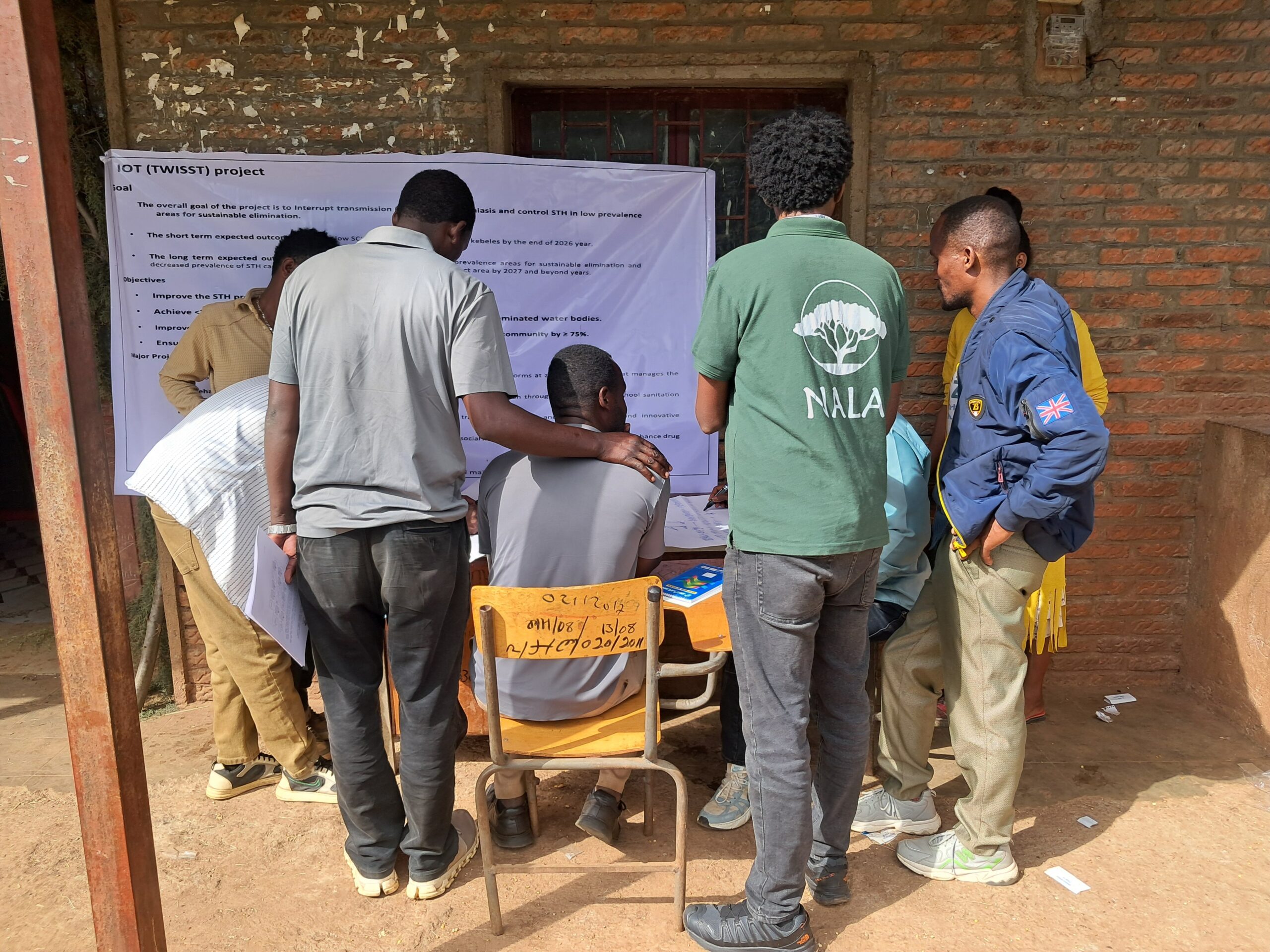
2024 to present | Ethiopia
With reduced prevalence of parasitic infections in parts of East Africa, attention is shifting from disease control to full elimination. The Interruption of Transmission (IoT) project supports this transition. Funded through the Deworming Innovation Fund (DIF), a flagship initiative of The END Fund, IoT targets eight districts across Ethiopia’s South West, Central and Southern regions, where schistosomiasis prevalence is low and soil-transmitted helminths remain at medium prevalence levels.
In Ethiopia, NALA serves as the implementing partner, working closely with the Ministry of Health to demonstrate how elimination of schistosomiasis and control of soil-transmitted helminths can be achieved and sustained at scale. Four of the eight project districts are areas where NALA has previously worked, allowing the project to build on established relationships, systems, and community knowledge.
Designed as an umbrella initiative, the project brings together the most effective interventions for breaking the cycle of infection. It integrates behavior change strategies, environmental control, multisectoral coordination and active engagement with schools and communities. While mass drug administration (MDA) remains essential, its effectiveness is enhanced through targeted social mobilization and coordination with complementary efforts.
Passive and active surveillance strategies, such as 5T: Test, Treat, Track, Test, Treat, enable health systems to identify and respond to transmission hotspots with precision. Local education campaigns and community mapping ensure that interventions are grounded in accurate data and community realities. In high-risk areas, trained residents conduct snail mapping to reduce environmental exposure.
Through deep collaboration with health extension workers, school clubs, community leaders and district level sectors as key implementing partners, the project promotes long-term improvements in hygiene and health practices. The IoT project is not only reducing infection, it is strengthening the systems needed to achieve and maintain national elimination goals.