
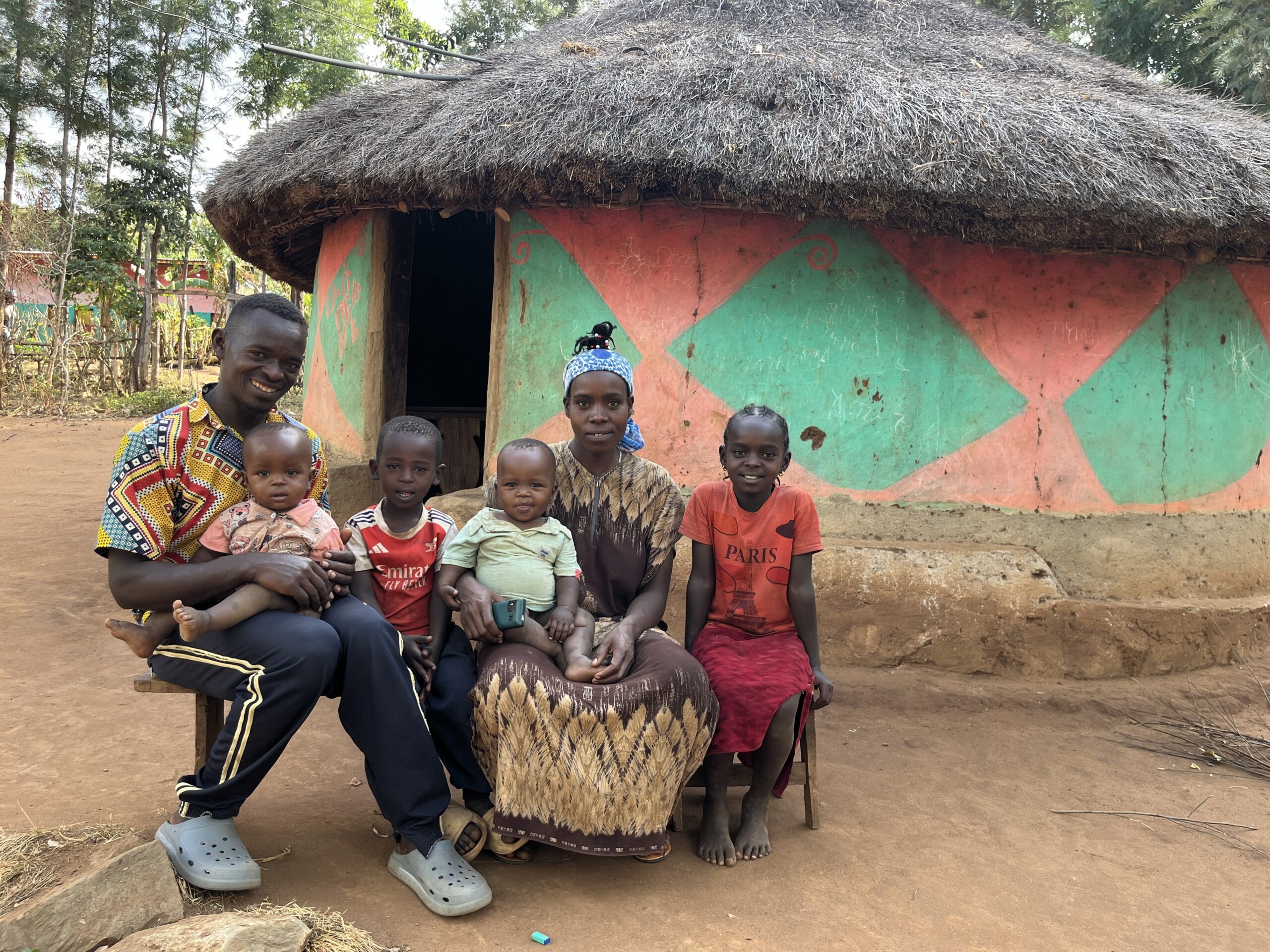
How Bereket Roro and his neighbours are taking action to protect their families from neglected tropical diseases in southern Ethiopia.
A cycle of recurring illness
Bereket lives with his family of five in Goldiya Kebele, a rural community in Benatsemay District, West Omo Zone, South Ethiopia region, where springs and streams are part of everyday life. For years, children regularly bathed in the springs, often experiencing skin irritation, swelling and other health problems afterwards. Bereket recalls how his family had to seek medical care almost every fifteen days, facing repeated illness without fully understanding its causes.
Like many families in the area, they relied on treatment when symptoms appeared, while the environmental and sanitation conditions contributing to disease transmission remained unchanged.
Understanding the risks and taking action
The turning point came when Bereket participated in health education and community prevention activities supported by NALA and local government health workers.
Through training on schistosomiasis, also known as bilharzia, he learned about the connection between freshwater snails, water contact and disease transmission, as well as the importance of sanitation and hygiene.
But the response went beyond education.
Bereket and his neighbors joined community efforts to clear vegetation around water points and manage conditions that can increase disease risk. Community members also received treatment through a mass drug administration campaign.
At home, Bereket applied what he learned and encouraged others to abandon open defecation. He became an active advocate for better sanitation and safer practices in his community.
Prevention becomes a community habit
Today, Bereket describes a different reality.
Community members regularly return to the water points, approximately every 15 days, to carry out environmental management activities. According to Bereket, skin irritation has become less common, children are experiencing fewer stomach problems, and his family needs medical attention less frequently.
The most important change is not only what Bereket has experienced, but what he and his neighbours are now doing differently.
Bereket has shared his knowledge with five neighbours, extending prevention messages beyond his own household.
“Before, we used to have stomach problems, irritated skin and itchiness. Now, we don’t see that problem anymore.”
Bereket Roro, community health champion, Goldiya Kebele
From receiving support to leading change
Bereket’s story illustrates what sustainable disease prevention can look like.
Treatment remains essential, but preventing repeated infections also requires changing the conditions that allow diseases to spread. By combining health education, treatment, environmental management and community participation, NALA works with local health systems to make prevention part of everyday life.
In Goldiya, communities are demonstrating what that can mean in practice.
Every 15 days once meant another search for medical help. Today, it is a reminder of the community’s commitment to protecting its health.
Prevention works best when the people most affected are part of the solution.