
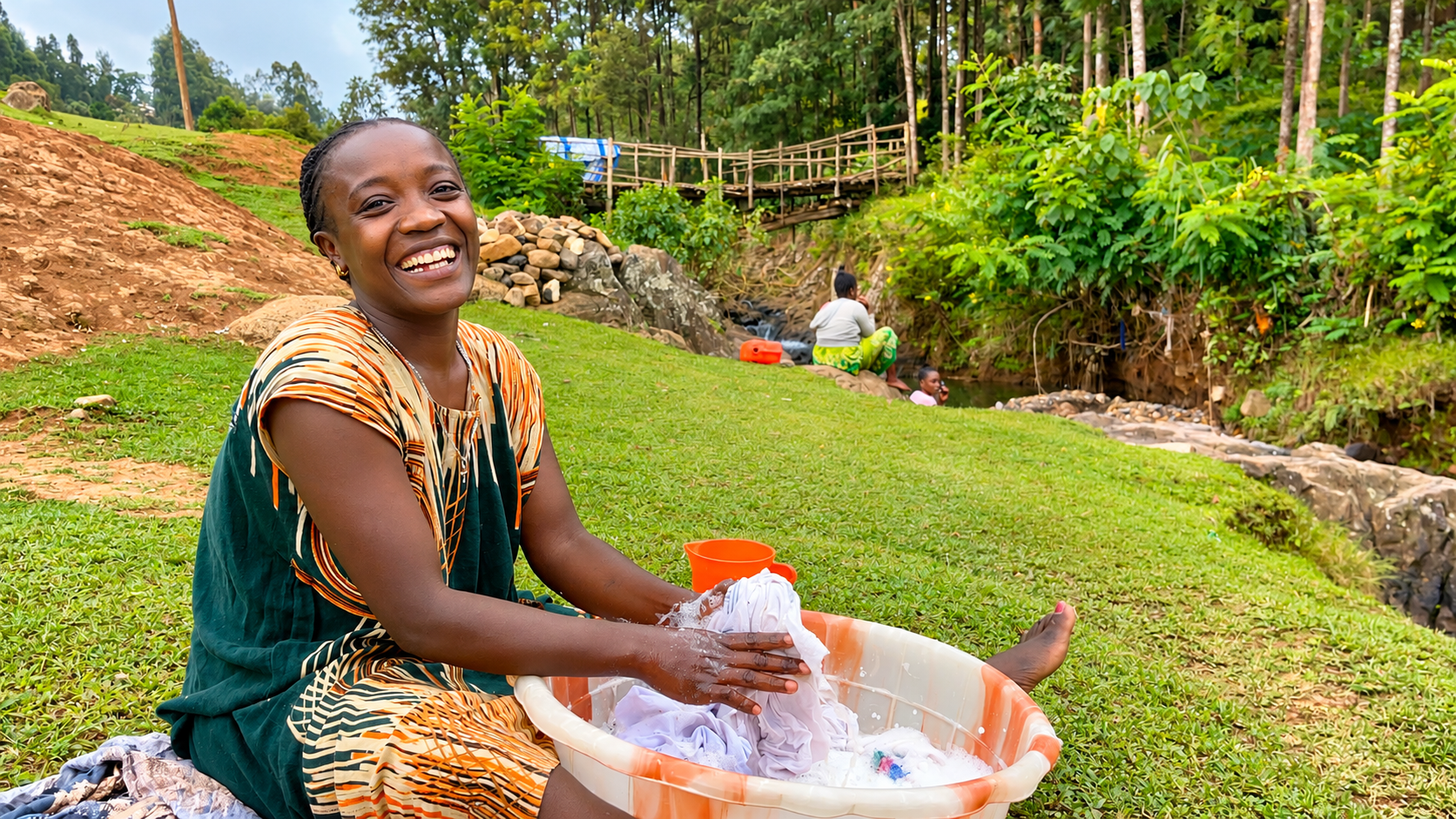
Weyneshet Kasa sits on a grassy bank, washing clothes in a basin. The water flows close by, but she stays out of it. It is a small change to a routine she has known for years, and one she now makes deliberately.
Weyneshet was born, raised and educated in South Bench, in Debrewerk City, Southwest Ethiopia Region. Her family still lives in the area, and the river remains part of everyday life for many households in her community. She says local residents use its water for daily activities, including washing clothes.
A familiar routine, a hidden risk
Schistosomiasis is one of the neglected tropical diseases (NTDs) spread through contact with freshwater that contains the parasite. The parasite can enter the body through the skin, so even every day chores like washing clothes can carry a risk. For people whose daily chores take them to the river, understanding this risk can make a practical difference.
Weyneshet recalls being unwell in the past, including stomach problems and other illnesses. Learning more about the risks associated with river water offered a practical way to think about protecting her health.
Learning changes how she washes
After targeted IoT Project behavioural change Interventions about water-related diseases, worms and parasitic infections, Weyneshet learned that some parasites in freshwater can enter the body through the skin. Although she can not give up washing clothes by the river, she changed how she does it.
Today, Weyneshet uses a basin, locally called a” Safa”, on the riverbank instead of standing in the stream. This allows her to continue an essential household task while reducing direct contact with the river water.
“Today, I wash my clothes in a basin on the riverbank instead of standing in the water.” Weyneshet Kasa, South Bench District
From knowledge to everyday action
Weyneshet’s new habit shows how prevention can become part of ordinary life. She says she feels safer washing from the bank. The change gives her a practical way to reduce direct contact with the stream as she carries out her daily chores.
In South Bench, NALA works with local health structures and communities to make NTD prevention part of daily life. The aim is to make health information useful in the places where daily decisions are made, whether at home, at school or beside the water.
For Weyneshet, the river is still there, and the laundry still needs washing. What has changed is her understanding of the risk and the way she chooses to protect herself. Sometimes prevention begins with a simple habit, repeated every day.