
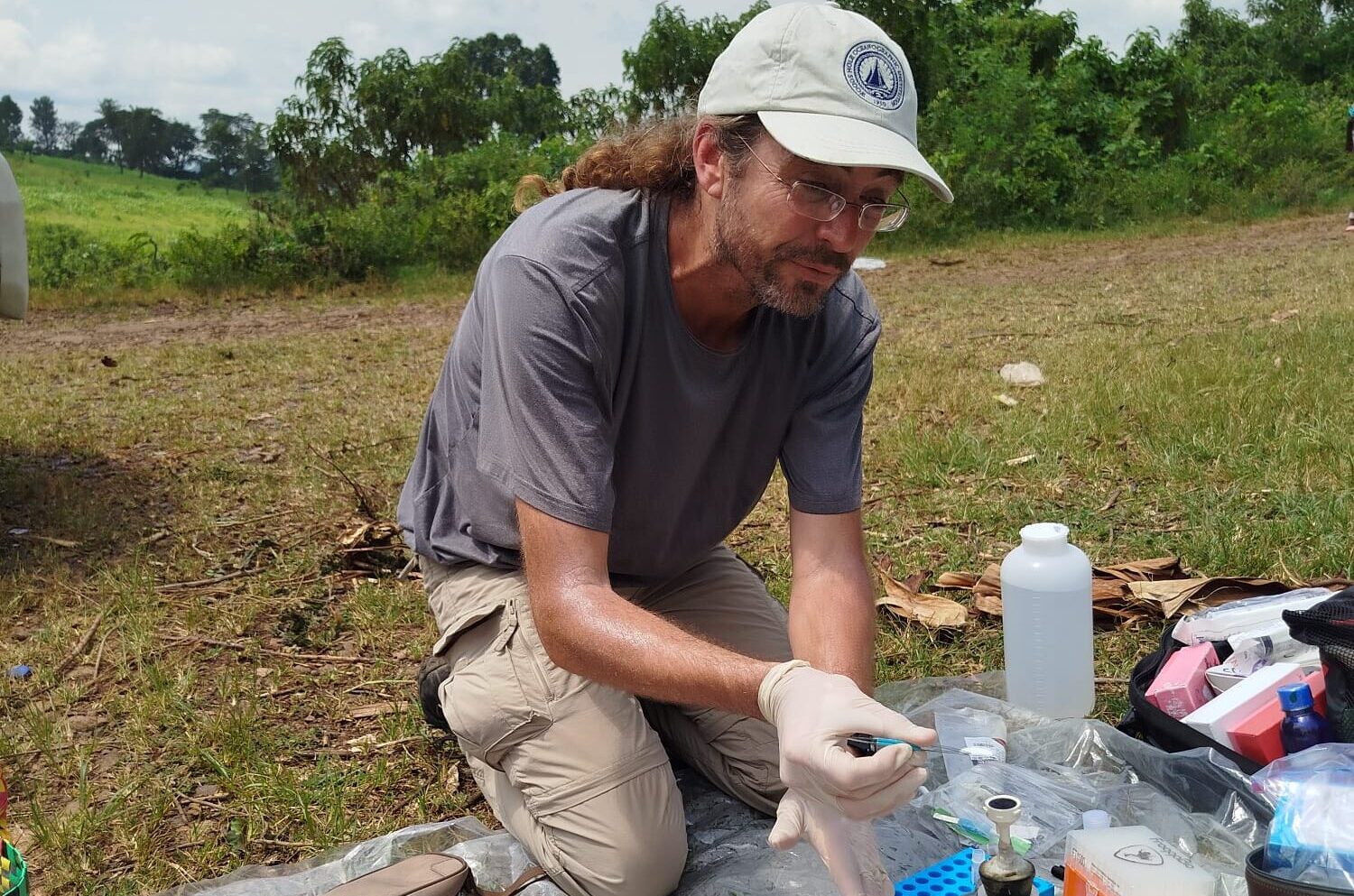
For Prof. Daniel Sher, joining NALA’s recent research trip to Ethiopia was a turning point. After years of studying marine organisms, from bacteria and algae to corals and jellyfish, he felt that he wants to apply his research lab’s skills to help address neglected tropical diseases (NTDs). “You don’t really understand a water body until you have actually seen it. Only by observing the flow of the water,
the location of snails, the taro fields, and how the children use the river, do you begin to gain a clearer understanding of just how complex – and important – the challenge of addressing these diseases is. Prevention really demands an interdisciplinary approach”.
A school that captured both the challenge and the hope
The team’s visit to a school in Mizan Aman left a deep impression. Three thousand students, one wash center, four toilets, and contaminated water that everyone must still use. The headmaster knew the risks but had no other option. For Daniel, this showed the scale and complexity of the problem.
At the same time, he found a source of optimism. Children crowded around during water sampling, asking questions and actively helping sample the water. Two girls shared their dreams of becoming a cardiologist and an architect. Their curiosity stayed with him long after he left.
Research that leads to action
The trip also strengthened Daniel’s understanding of NALA’s approach: working inside local systems, building long term partnerships, and investing in local leadership. Meetings with Professor Zeleke and other researchers at universities in Jima, Mizan Tepi, and Addis Ababa confirmed the depth of expertise already present in Ethiopia, even in under-resourced labs.
He came away convinced that combining local wisdom with tools such as snail mapping, environmental DNA, remote sensing and geospatial analysis will help prioritize interventions more effectively. Data can guide practical decisions, such as where to place a toilet or which water source poses the greatest risk.
A renewed commitment to collaboration
Daniel returned inspired to continue building a collaborative research network with NALA and Ethiopian institutions. Teaching courses, supporting training, and analyzing data together are now part of the long term vision of his lab.
For NALA’s supporters, Daniel’s reflections show why your partnership matters. By helping researchers and communities work side by side, you make it possible to turn scientific insight into real change for families living with preventable diseases.